VIA Data-Driven Road Safety Software / VIA Road Safety Software / Stand H15
Mercedes: Redefining space in a new era: the all-new electric Mercedes‑Benz VLE / Mercedes-Benz AG / Stand A04
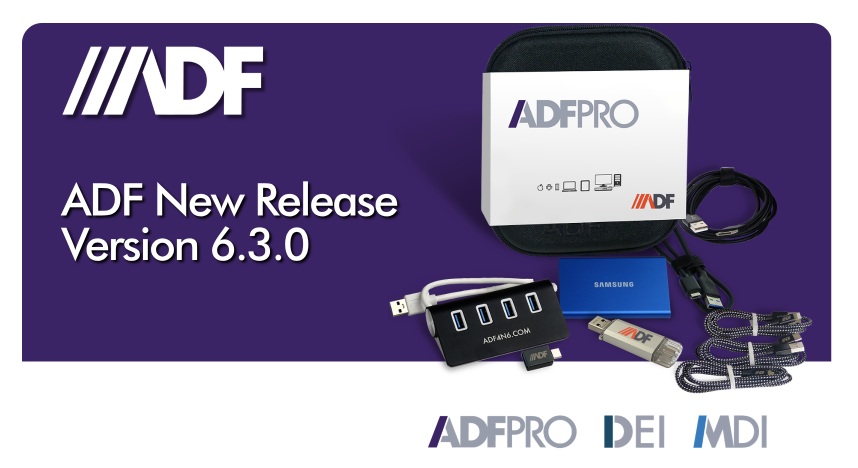
ADF New Release Version 6.3.0 / ADF Solutions, Inc. / Stand H43
VIA Data-Driven Road Safety Software translates local road safety policy into actionable insights by combining diverse local data into prioritized lists of locations and geographic visualizations.
Important and new advantages for the buyer/end user:
VIA launches Data-Driven Road Safety Software for international markets.
Today, VIA announces the international availability of its Data-Driven Road Safety Software, a new platform that enables public authorities to translate local road safety policy into practical action.
The software integrates multiple local data sources to generate prioritized lists of high-risk locations, presented alongside intuitive geographic visualizations. This enables users to identify where interventions are most urgently required.
Developed for municipalities, regional authorities, and police services, the software is designed to be accessible and user-friendly, even without dedicated IT or data expertise. It supports a data-driven approach to road safety by combining a wide range of inputs, including collision data, speed data derived from Floating Car Data, near-miss indicators such as harsh braking events, and Safety Performance Indicators related to road infrastructure risk.
The platform guides users step by step from policy to concrete measures. Local policy defines the analytical focus, while built-in prioritization tools support identification of key locations. The result is a clear and actionable overview with detailed insights and in-depth analyses available for each location.
Existing policy goals are stored in a library, allowing users to manage multiple objectives and update priority lists as new data becomes available.
The software has already been adopted by more than 200 municipalities and police services in the Netherlands, with consistently positive user feedback.
With its international rollout, VIA is extending its road safety expertise to markets including Germany, Belgium, the United Kingdom, and Chile. We aim to support decentralized data-driven road safety implementation at local level worldwide.
About VIA
VIA is a Dutch road safety software specialist that supports public authorities translate raw data into actionable road safety insight.
https://www.via.nl/

The best of two worlds: the VLE combines limousine-like ride and handling with MPV-style versatility
A broad VLE portfolio: the offering ranges from flexible vehicles for families and leisure-active customers to exclusive shuttles
Ideal fit for every journey: best-in-class efficiency, new 800-volt technology and high-performance charging
Infotainment has never been so immersive and driving has never been more intuitive thanks to MB.OS and the exceptional MBUX Rear Space Experience
First vehicle based on the new Van Architecture, writing the next chapter in the 140-year automotive history of Mercedes‑Benz
Stuttgart. With the all-new electric VLE, Mercedes-Benz is ushering in a new era. As the first vehicle to be built on the newly developed modular, flexible and scalable Van Architecture, the result is a completely redefined Grand Limousine. Among other things, it benefits from the exceptionally intelligent Mercedes-Benz Operating System (MB.OS). The VLE combines the best of two worlds: the driving comfort and handling of a limousine with the spaciousness, versatility and flexibility of an MPV. Thanks to its efficiency, new 800-volt technology and high-performance charging, the VLE is the ideal fit for every journey.
Its design is just as impressive as the extraordinary spatial experience, which elevates the typical “Welcome home.” feeling in a Mercedes-Benz to a new level. The VLE redefines the comfort and versatility of grand space for up to eight people, pairing it with an unparalleled digital experience and superior ride. The new AIRMATIC with level control turns every journey into a remarkably serene experience – only floating would be smoother. In addition, rear-axle steering makes the VLE exceptionally agile and nimble, enabling it to navigate narrow lanes and multi-storey car parks with ease.
“The all-new electric VLE marks the next significant milestone in our successful 140-year automotive history. Shaped by our pioneering spirit, it redefines the notion of space and comfort, and adds a game-changing level of versatility and innovation. It also offers a class-leading range of more than 700 km. The VLE is the first model to be built on the new Van Architecture, designed to meet a wide range of customer needs and adapt to any lifestyle.”
Ola Källenius, Chairman of the Board of Management, Mercedes-Benz Group AG
10 reasons why the new VLE redefines the Grand Limousine
New modular and flexible Van Architecture – innovative aesthetics that captivate:
The new VLE embodies a completely new design with a low, streamlined silhouette and iconic aesthetics. This results in outstanding aerodynamics, with a drag coefficient of just 0.25.
Highly flexible seating for up to eight people – manual Roll & Go or remote “seat ballet”:
The manually operated seats feature four integrated wheels and can be effortlessly moved back and forth, locked in any position, or easily removed and rolled into the garage. The electrically adjustable seats can be easily moved via app and head unit, almost like choreographing a ballet (Remote Variable Rear Space).
Newly developed seats – choose your style and comfort level:
The new mechanical and electrical individual seats and benches can be configured in multiple different ways. The highlight is an electric Grand Comfort Seat with an additional pillow, wireless charging, lumbar support, massage function and calf support.
Unparalleled MBUX Rear Space Experience – turn every journey into an immersive adventure:
Hidden in the headliner above the front seats is a retractable, 79‑centimetre (31.3‑inch) panoramic screen with 8K resolution, split-screen function and an eight-megapixel camera – perfect for enjoying films, music videos, and games or for joining video conferences.
Superior ride – agile and comfortable like a true premium limousine:
AIRMATIC air suspension with 40 mm of level control makes every journey a remarkably serene experience. And with seven-degree rear-axle steering, the VLE is exceptionally agile and boasts an extraordinarily small curb-to-curb turning circle of just 10.9 metres.
More than 700 kilometres WLTP[1] range – long-distance comfort without range anxiety:
On long journeys the VLE can be recharged for a range of up to 355 kilometres (WLTP)[2] within just 15 minutes, thanks to 800-volt technology and a new battery with a usable energy content of 115 kWh.
Mercedes-Benz VLE 300 electric | provisional figures: combined energy consumption: 20.4-18.6 kWh/100 km | combined CO₂ emissions: 0 g/km | CO₂ class: A[3]
Extraordinary interior experience – Sky View panoramic roof:
The impressive glass roof conveys an unprecedented sense of space and freedom as well as tranquillity. Surround ambient lighting showcases it in striking fashion. Simply relax and enjoy. An electric sunblind protects against excessive sunlight.
Top-notch digital intelligence – the VLE makes your driving experience more personal and smarter:
Thanks to the AI-powered Mercedes-Benz Operating System (MB.OS), the VLE features the latest MBUX with intuitive and personal control. It also benefits from the MBUX Virtual Assistant, which uses multi-agent generative AI and understands complex conversations with memory, responding like an informed friend. Over-the-air updates keep the VLE up to date, adding new features without the customer ever having to visit a dealer.
Digital cockpit – MBUX Superscreen:
Three screens behind a large glass surface: a 26‑centimetre (10.25‑inch) driver display, a 35.6‑centimetre (14‑inch) central display, and a 35.6‑centimetre (14‑inch) screen for the front passenger. While the driver benefits from clear, focused information, the front passenger can enjoy a personalised entertainment experience – such as video streaming, gaming or apps.
Lane changing and steering made effortless – MB.DRIVE:
Distance Assist DISTRONIC comes as standard. Optional MB.DRIVE ASSIST adds semi-autonomous steering on motorways and a revolutionary Lane Change Assist. Just flick the indicator and let the Grand Limousine handle it.

ADF 6.3: Advancing Triage-First Digital Investigations
Introduction
Digital investigations are evolving.
Investigators today face an unprecedented volume of digital evidence — more devices, more applications, and increasing pressure to deliver answers quickly while maintaining evidentiary integrity. Traditional workflows built around full forensic acquisition alone are no longer sufficient for modern investigative environments.
ADF 6.3 introduces new capabilities designed to help agencies move faster from device seizure to investigative insight while maintaining security, efficiency, and operational confidence.
This release represents another step toward a triage-first investigative model, enabling investigators to identify relevant evidence earlier, reduce unnecessary processing, and focus forensic resources where they matter most.
Built for Faster Investigative Decisions
One of the most significant advancements in ADF 6.3 is the introduction of targeted device acquisition and scanning.
Investigators can now selectively acquire and analyze connected Android, iOS, and ChromeOS devices with the option to automatically delete acquisitions immediately after analysis. When deletion is selected, acquisitions are encrypted on-the-fly prior to scanning, ensuring sensitive data remains protected and unrecoverable once removed.
This capability supports agencies that must balance investigative speed with strict data-handling and privacy requirements.
Instead of collecting everything first and reviewing later, investigators can quickly determine investigative value at the point of triage.
Expanded Access to Mobile Evidence
Mobile devices continue to generate critical investigative intelligence across communications, location activity, and personal data applications.
ADF 6.3 expands supported evidence sources, including:
- Gmail data extraction with plain text and HTML message bodies
- Samsung Notes artifact integration
- Google Maps saved locations
- Zangi communications data, including messages, contacts, and calls
- Improved browser cache analysis capturing additional referenced media files
These additions help investigators uncover context and relationships earlier in an investigation without expanding forensic backlogs.
Supporting Real-World Forensic Workflows
Modern investigations rarely rely on a single acquisition method. Agencies often work across multiple tools and evidence sources.
ADF 6.3 introduces expanded compatibility with existing forensic ecosystems, including:
- Scanning of iTunes backups, including encrypted backups with password validation
- Support for FFS logical images created using Cellebrite UFED tools
- Improved handling of encrypted storage environments such as FileVault2
These enhancements allow investigators to analyze more evidence sources within a unified triage workflow.
Designed Around Investigator Experience
Efficiency during investigations depends not only on capability but usability.
ADF 6.3 includes several workflow and interface improvements driven by investigator feedback:
- Reorganized navigation for faster access to investigative functions
- Dedicated viewing tabs for large artifacts such as message content and emails
- New dark mode interface for low-light environments
- Updated visual design aligned with ADF’s 2026 branding
- Performance improvements for Android acquisitions
- Easier access to acquisition metadata through direct hyperlinks
Together, these updates reduce friction during analysis and help investigators remain focused on investigative outcomes rather than tool management.
Strengthening Security Throughout the Acquisition Process
Handling digital evidence requires strict attention to data security.
ADF 6.3 enhances acquisition protection by enabling encryption before scanning begins when automatic deletion workflows are selected. This approach ensures that temporary investigative data is safeguarded throughout the process while minimizing long-term storage risks.
The result is a triage workflow that supports both operational efficiency and responsible evidence handling.
Continuing the Shift Toward Triage-First Investigations
Across law enforcement, corporate investigations, and digital forensic units, agencies are increasingly adopting triage workflows to address growing investigative demand.
ADF’s continued investment in targeted acquisition, expanded artifact coverage, and investigator-focused usability reflects a broader industry transition: moving from evidence collection alone toward faster investigative decision-making.
ADF 6.3 is designed to support that transition.
See ADF 6.3 in Action
ADF 6.3 is now available.
Organizations interested in learning how these capabilities support modern investigative workflows can explore the full release details or join our upcoming live session demonstrating the new features and real-world investigative use cases.
Download ADF 6.3
Register for the May 20 live webinar
Looking Ahead
Digital investigations will continue to evolve as devices, applications, and data volumes grow.
ADF remains focused on helping investigators adapt to that reality — delivering tools that prioritize speed, usability, and investigative clarity while maintaining forensic rigor.
ADF 6.3 represents another step forward in enabling investigators to obtain answers faster and operate with confidence in an increasingly complex digital landscape.